American Roulette Statistical Analysis: The Brutal Math Behind the Wheel
American Roulette is not a game of luck dressed up in glamour—it is a statistically savage machine engineered to bleed your bankroll at a rate that most players never bother to calculate. The double-zero pocket is the executioner, and the house edge is the sentence. If you are still walking up to a 38-pocket wheel thinking your "system" can outsmart it, you have already lost before the ball drops. 🎯
The raw numbers do not negotiate. An American wheel carries 38 pockets: 1 through 36, plus 0 and 00. A European wheel carries 37. That single extra green pocket is the difference between a 2.70% edge and a 5.26% edge—nearly double the bleed. On an even-money bet like red or black, you win 18 out of 38 times. The probability of winning is 47.37%. The probability of losing is 52.63%. The payout, however, remains 1:1. That gap is not a rounding error. That gap is the entire business model.

Expected Value: Where the Leak Becomes a Flood
Run the expectation on a $100 even-money wager and the math turns ugly fast. Expected value equals (0.4737 × $100) minus (0.5263 × $100), which lands at negative $5.26 per spin. That is your American Roulette statistical analysis in one line: every single spin costs you 5.26% of your stake in expected terms, regardless of whether you win or lose that particular round. Over 1,000 spins at $100 a pop, the theoretical drain is $5,260. The variance will mask it for a while—sometimes for a long while—but the expectation never blinks.
This is why the double-zero layout is a predator's playground. The casino does not need to cheat, rig the wheel, or employ sleight of hand. The geometry of the wheel does all the work. 🎰
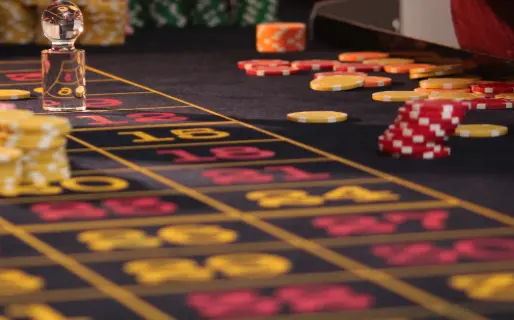
Inside vs. Outside Bets: Same Edge, Different Variance
Here is where the amateurs get loud and the professionals get quiet. Players love to argue that inside bets carry a worse edge than outside bets. That is statistically false. A straight-up bet on a single number pays 35:1, and the true odds are 37:1 against you. The expected value is identical: negative 5.26%. A split bet, a street bet, a corner bet—every single wager on the American layout carries the exact same house edge. The only variable that changes is variance, not expectation. Inside bets simply deliver the same bleed in violent, high-amplitude swings. Outside bets deliver it in slow, grinding increments. The house does not care which flavor of pain you choose.
The 5.26% Anchor and Why It Never Moves
No progression system, no martingale ladder, no "hot number" tracking sheet alters the fundamental probability structure. The wheel has no memory. Each spin is an independent event with fixed probabilities. The house edge on American Roulette is a fixed constant baked into the payout table, and it applies to every bet type without exception. The only legitimate way to reduce the bleed is to play a single-zero wheel, which cuts the edge to 2.70%. That is the entire optimization space. Everything else is noise, superstition, and expensive self-deception.
The statistical reality is that American Roulette is one of the worst-value table games in the entire pit for the player. The 5.26% edge compounds relentlessly across sessions, and the payout structure offers zero mechanism to offset it. The wheel does not reward courage, pattern recognition, or bankroll discipline. It rewards the house, every spin, at a rate that is mathematically locked and statistically undeniable. 💀