Baccarat Dragon 7 Side Bet Frequency and the Low Limit EZ Baccarat Table Reality
The Dragon 7 side bet hits roughly once every 43 to 46 hands on a standard EZ Baccarat layout, and anyone who tells you otherwise has never actually tracked a shoe. This is the number that matters, the frequency that separates a profitable grind from a slow bleed, and the reason low limit EZ Baccarat tables attract a specific breed of player who understands exactly what they are buying into.
Let me be brutally direct: the Dragon 7 is not a lottery ticket. It is a priced event with a house edge hovering around 7.6 percent, and the frequency of that event is the entire foundation of your bankroll math. 🎯 If you cannot recite the trigger conditions and the statistical rhythm from memory, you are donating money to the felt.

The Mechanic That Defines Dragon 7 Frequency
The Dragon 7 pays when the Banker wins with a three-card total of seven. That is it. No ambiguity, no dealer discretion. The frequency depends entirely on the composition of the shoe and the drawing patterns of the Player and Banker hands. In an eight-deck shoe, the mathematical probability sits at approximately 2.2 percent per hand, which translates to that 43-to-46 hand window I mentioned earlier.
But here is where the amateurs get slaughtered. They hear "2.2 percent" and assume they can flat bet the side action every hand. Wrong. The variance on a 2.2 percent event is savage, and the Baccarat Dragon 7 Side Bet Frequency clusters in ways that punish flat betting. You will see droughts of 120 hands and then three triggers in twenty hands. That clustering is not random noise; it is the natural distribution of a low-probability event, and it demands a stalking approach rather than a spray-and-pray approach.
Why Low Limit EZ Baccarat Tables Change the Calculus
Low limit EZ Baccarat tables, typically running $5 to $15 minimums, are the only sensible environment for hunting this side bet. The reason is pure bankroll survival. At a $25 table, a 120-hand drought on a $5 side bet wager wipes out $600 before you ever see a trigger. At a $5 table with a $1 or $2 side bet minimum, that same drought costs you $120 to $240. The Low Limit EZ Baccarat Tables give you the runway to actually wait for frequency to revert to mean.
💡 Here is the insider angle most players miss: table minimums on the main game and the side bet are decoupled. You can sit at a $10 EZ Baccarat table and often place a $1 Dragon 7 wager. That asymmetry is the entire edge structure for a frequency-based hunter. You are paying a tiny premium for exposure to a 43-to-1 event while your main-game action keeps you seated and rated.
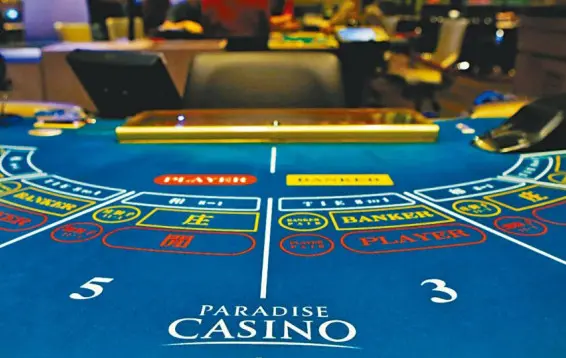
Reading the Shoe for Frequency Signals
Frequency is not purely static. The composition of the shoe shifts as cards deplete, and a sharp tracker watches for the telltale signs. Heavy depletion of sevens and eights in the early shoe suppresses Dragon 7 frequency. Conversely, a shoe that burns through low cards and leaves a dense middle creates a fatter tail on the three-card seven distribution.
🔥 Do not overcomplicate this. You are not counting cards into a perfect index. You are watching for obvious composition skew and adjusting your side bet sizing accordingly. When the shoe is seven-rich, you press. When it is seven-poor, you sit on your hands and let the frequency come back to you. The players who lose are the ones who treat every shoe as identical.
The Bankroll Math Nobody Wants to Hear
A 2.2 percent event with a 7.6 percent house edge means your expected loss per Dragon 7 wager is fixed and unforgiving. The only way frequency-based play works is if your average bet size during high-probability windows exceeds your average bet size during droughts. That is the whole game. Low limit tables enable this because the absolute dollar swings stay manageable while you wait for the 43-hand window to open.
Track your triggers. Log every Dragon 7 outcome across at least 500 hands. You will find the frequency stabilizes near the theoretical mark, and you will find that your profitability lives entirely in your sizing discipline during the clusters. The math does not care about your feelings, and the felt does not care about your confidence.